
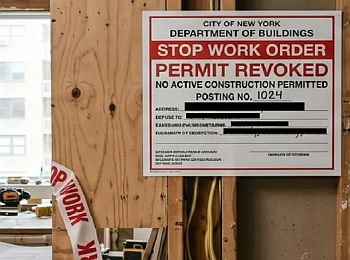
This article is for NYC homeowners and small contractors who suddenly see a Stop Work Order on their project and are not sure what it means. A Stop Work Order (SWO*) can stop all work or only specific work, affect your budget and schedule, and lead to penalties if it is ignored. This guide explains practical next steps after an SWO is issued.
Stop Work Order
A Stop Work Order (SWO*) from the NYC Department of Buildings (DOB*) is an enforcement action requiring the work identified by DOB to stop. DOB may issue an SWO when inspectors find unsafe conditions, illegal work, or work that could endanger people or property.
The posted notice and related DOB records identify the scope of the order. A full SWO generally stops all work at the site, while a partial SWO may stop only specific work or work in a particular area. Do not continue, restart, or begin work unless it is outside the scope of the order or DOB has authorized it.
If work continues in violation of an SWO, DOB may issue additional violations and civil penalties. Preserve the notice, document the site, and work with the appropriate licensed professional to understand the cited condition and the steps DOB requires before it will rescind the order.
Full Stop Work Order
Under a full SWO, all work is prohibited, except remedial work required to make the site safe when authorized by the Commissioner. See our glossary for the definition and related terms.
Partial Stop Work Order
A partial SWO does not stop all work at a site. It prohibits the work, or the work in the area, identified by DOB, except remedial work required to make the site safe when authorized by the Commissioner. See our glossary for the definition and related terms.
What to do in the first 24 hours after an SWO
When you see a Stop Work Order on your property, the most important thing is to stay calm and take a few clear steps.
- Stop the work identified by the order immediately. Do not resume, begin other work, or allow contractors to continue unless DOB has confirmed that the work is outside the order’s scope or has authorized it.
- Do not remove, cover, or alter the Stop Work Order notice. Take clear photographs of it and keep a copy for your records.
- Contact the person responsible for the work, such as your contractor, architect, engineer, or expeditor, and notify them about the SWO immediately.
- Collect key job documents, including permits, approved plans, contracts, inspection records, and prior DOB notices, and keep them together.
- Without performing corrective work yourself, document visible safety conditions such as open holes, loose scaffolding, or exposed wiring. Ask the appropriate licensed professional whether DOB-authorized remedial safety work is needed.
- Review the Stop Work Order notice and the related DOB record for the cited condition, complaint number, violation number, and instructions. Check DOB NOW or other DOB public records when they apply to your case.
- If the scope or required corrections are unclear, arrange for an appropriate licensed professional to review the order, site conditions, permits, and next filing or inspection steps.
If you are curious about Rescinded SWO code definition?
See our glossary.

