Building a Patio in NYC: Rules and Permits
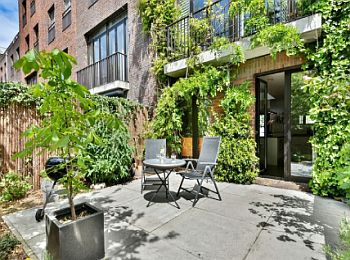
In NYC, many patios are regulated by the Department of Buildings and often require permits, especially when they involve platforms, stairs, retaining walls, or attachment to the house.
Building a patio without required permits in NYC can lead to work‑without‑permit violations, DOB civil penalties, stop‑work orders, and, in some cases, removal or costly legalization of the work. Homeowners should treat patios similarly to decks and porches: check zoning, confirm if a permit is required, use a NYS PE or RA when needed, and legalize any unpermitted work before DOB issues a violation.
For DOB, many homeowner patios are treated under the same rules as decks and porches, not as exempt landscaping.
Important information
If the patio is already built without a permit, DOB’s rules allow a reduced “legalization” penalty if you apply for a permit for completed unpermitted work before they issue a violation.
Common pitfalls that catch homeowners
Assuming ground‑level or low platforms are “just a patio.” DOB materials on decks/porches make clear that platforms, stairs, and attached structures usually fall under permit requirements, even if they feel like landscaping to a homeowner.
Ignoring setback and rear‑yard rules. DOB guidance for decks/porches refers to limits such as maximum projection into the rear yard and minimum distances to property lines (for example, at least about 3 feet to the side lot line, and depth limits from the rear wall), which many owners accidentally violate when they pave right up to the fence.
Working contrary to the Certificate of Occupancy. Using new stairs, platforms, or roof/garage surfaces as patios without proper approvals can lead to “occupancy contrary to CO/records” violations with substantial penalties.
Trusting contractor assurances instead of DOB rules. A contractor telling you “no permit needed” does not protect you; DOB looks at what was built, not what you were told, and issues violations to the owner.
What the penalties look like
- For work without a permit on a one‑ or two‑family dwelling, DOB’s civil penalty is the greater of 6 times the normal permit fee or 600 dollars, capped at 10,000 dollars.
- For other buildings (including common areas in multi‑family), the penalty jumps to 21 times the permit fee, minimum 6,000 dollars and up to 15,000 dollars.
- Separate from the “work without permit” penalty, the Administrative Code allows civil penalties for hazardous and major violations that can reach from 2,500 to 25,000 dollars per violation, plus daily or monthly accruals until correction.
- If you ignore a Stop Work Order, DOB can issue extra Class 1 violations with additional thousands in fines and, in extreme cases, refer for criminal enforcement.
How to avoid patio‑related DOB violations and fines
- Check if your idea is really exempt. Review DOB’s “work you can do without a permit” and deck/porch guidance; anything involving platforms, foundations, walls, stairs, or attachment to the house should be assumed to need a permit unless a PE/RA or DOB borough office tells you otherwise in writing
- Confirm zoning and lot limits first. Before you design the patio, verify allowable yard coverage, setbacks, and any special district or landmark rules; DOB’s deck/porch guidance is built on those zoning restraints.
- Use a licensed design professional when in doubt. For any structural or attached work (raised patio over fill, retaining walls, decks or porches off the rear wall), hire a NYS PE or RA to design and file plans; DOB explicitly requires licensed professionals for these projects.
- Get the permit and inspections before you build. DOB says construction should only begin after plans are approved and permits issued; once you have the permit, you or a licensed contractor can perform the work (subject to insurance and licensing rules) and call in the required inspections.

NEXT STEP
Patio, deck, porch in real NYC examples

Good to know
This page is for general education only and is based on public New York City sources when available. Some technical and legal terms are simplified into plain English to help homeowners and ESL readers. It is not legal advice, and it does not replace guidance from a licensed professional. NYC construction and safety rules change often, and your project may have extra DOB*, OSHA, or local requirements. Before you start work, always check current rules with a licensed design professional or directly with the NYC Department of Buildings.
Feel free to comment on this post
This is an advertisement box

If you see any capital letter abbreviations on this page or in an official letter you received from the city and you do not understand them, you can try to look them up on our NYC Violation Codes HUB page with the search tool.
Revised