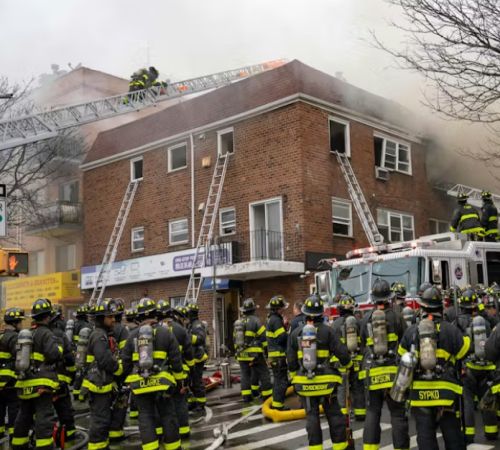
A deadly 2026 fire in Flushing shows why illegal building conversions can put tenants, homeowners, and first responders at risk. This case also shows why an active DOB Vacate Order should never be treated as ordinary paperwork.
For this article, “SRO-style” means a layout resembling a single-room-occupancy or rooming-house arrangement: multiple separately occupied rooms within a building that was not approved for that use. The label alone does not decide whether a building is legal. DOB looks at the approved building configuration, occupancy, exits, permits, and the conditions found during inspection.
The deadly Queens fire
On March 16, 2026, a four-alarm fire broke out at a three-story building near Avery Avenue and College Point Boulevard in Flushing, Queens. Four people died, including 3-year-old Sihan Yang, and other occupants were injured. News reports said that some people jumped from windows to escape the fire and smoke.
More than 230 FDNY firefighters and EMS members reportedly responded. Two firefighters were hospitalized after part of the structure failed during the response.
This was a criminal case as well as a building-safety case. The City Medical Examiner ruled the four deaths homicides. In April 2026, prosecutors charged a 38-year-old man with murder, arson, assault, and petit larceny in connection with the fire. These are allegations, and the defendant is presumed innocent unless proven guilty in court.
Reported illegal conversion history
News reports based on DOB records said that the building had a long history of complaints involving illegal subdivisions and illegal conversions. In 2020, DOB reportedly issued a partial Vacate Order after finding that a legal two-family building had been converted into a seven-family layout.
Reports described additional rooms with key-locking devices, beds, televisions, refrigerators, food items, and cooking equipment. That kind of arrangement can turn a small residential building into a rooming-house-style operation without the required approvals, safety protections, or legal occupancy.
The partial DOB Vacate Order
According to reporting based on City records, the partial Vacate Order applied to the building’s second and third floors and remained active at the time of the March 2026 fire.
This is an important lesson for NYC homeowners and small landlords. A Vacate Order is not simply a warning letter or a fine. DOB may issue a full or partial Vacate Order when an inspection finds illegal or dangerous conditions that pose an imminent danger to occupants. A partial order can apply to only certain rooms, floors, or areas; a full order can apply to the entire property.
While a Vacate Order remains in effect, people are generally not allowed to enter the affected building or area. The order remains in place until the dangerous condition is corrected and DOB withdraws the order. An owner should not assume that moving out a tenant, removing one partition, or beginning repairs automatically closes the case.
A Vacate Order can lead to immediate displacement, compliance costs, and penalties.
DOB states that the City can immediately vacate unsafe, illegal apartments or rooms. Owners may face violations, required corrections, loss of rental income, and other enforcement consequences while the order remains active.
DOB also states that property owners can be fined up to $25,000 in connection with unsafe illegal apartments or rooms, in addition to other possible penalties. The exact consequences depend on the specific conditions, violations, and enforcement history.
The practical lesson: “I will fix it later” is not a compliance plan. Once DOB identifies an imminent danger, the owner may have to manage resident displacement, professional fees, repairs, filings, inspections, hearings, and loss of use of part or all of the property.
Why an illegal layout can increase fire danger
Illegal conversions do not cause every fire. However, an unapproved layout can make a fire more dangerous by making escape and rescue harder. Risks can include:
- Extra partitions and rooms that make the interior layout confusing during an emergency.
- Blocked, narrowed, altered, or difficult-to-find routes to stairs, exits, and windows.
- Interior locks that delay escape, require a key from inside, malfunction, or prevent occupants from leaving quickly.
- Cooking equipment, hot plates, overloaded outlets, extension cords, or improvised electrical setups in sleeping areas.
- Overcrowding, which means more people may be sleeping in a limited space when a fire starts.
- Unclear responsibility for repairs, access control, smoke alarms, exits, and basic property maintenance.
In the Queens case, reporting described a building with a history of complaints and a still-active partial Vacate Order. That does not determine criminal responsibility for the fire. It does show why dangerous occupancy conditions can become especially serious when an emergency occurs.
What NYC homeowners should check now
If you own a one-, two-, or small multifamily building, do not wait for a complaint, inspection, or emergency to review how your property is being used.
- Do not add bedrooms, apartments, or separately rented rooms by installing partitions without first confirming that the work and the new use are legal.
- Do not use a basement, attic, cellar, garage, or storage area as living space unless it has been legally approved for occupancy.
- Keep hallways, stairs, doors, and exit routes clear and usable at all times.
- Do not install locks that could prevent a person from leaving quickly in an emergency.
- Do not allow unsafe cooking equipment, overloaded extension cords, or improvised electrical wiring in sleeping rooms.
- If DOB has issued a Notice of Violation, Stop Work Order, or Vacate Order, read the document carefully and address the cited condition promptly.
- Before changing a layout or trying to legalize an existing condition, speak with an appropriate registered design professional, licensed contractor, attorney, or qualified NYC code professional.
Illegal conversion and DOB enforcement
An illegal conversion generally means changing a building, apartment, basement, cellar, attic, or other space in a way that is not approved by DOB or does not comply with applicable building, zoning, housing, fire-safety, or occupancy rules.
For example, changing a legal two-family building into multiple separately occupied rooms or apartments without approvals can create an illegal conversion problem. The issue is not only rental income or paperwork. The layout may affect emergency exits, occupancy limits, fire protection, electrical safety, ventilation, sanitation, and access for first responders.
Every property is different. A homeowner should not assume that a room is legal simply because it has been rented for years, because a previous owner created it, or because it has a door, bed, and kitchen equipment. The legal status depends on the approved use and configuration of the property and the actual conditions on site.
Key takeaway for homeowners
The Queens fire was an extreme tragedy, and the criminal case must proceed through the courts. But the reported illegal-conversion history and active partial Vacate Order provide a separate warning for NYC property owners: unsafe, unapproved rooming-house-style layouts can make it harder for occupants to escape and harder for firefighters to respond.
If you are considering extra bedrooms, a basement apartment, attic living space, locked rental rooms, or any other layout change, confirm the legal and safety requirements before work begins. Correcting an unsafe arrangement after a DOB enforcement action, a tenant complaint, or a fire is usually far more difficult and expensive than doing the project correctly from the start.
Read the Iqarius guide: What is an illegal conversion in NYC?
Sources and update note: This article is based on publicly reported information about the March 16, 2026 Flushing fire and DOB enforcement history. Criminal charges are allegations, and the defendant is presumed innocent unless and until proven guilty in court. Readers should consult official DOB records and qualified professionals for property-specific guidance.