Sidewalk as a public area next to your property in NYC and a common source of violations
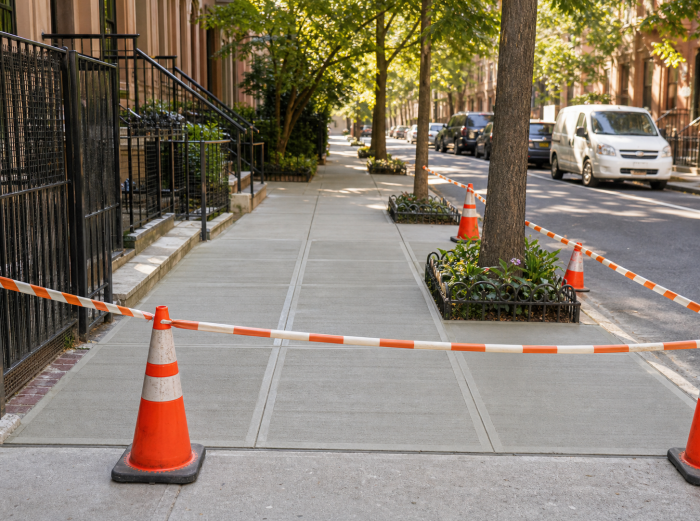
Sidewalk is the paved pedestrian area in the public right-of-way next to a street and beside adjacent property. In NYC, a sidewalk is public space, but the owner of the property next to it is often responsible for correcting certain unsafe conditions and keeping the walking surface reasonably safe.
Why sidewalks matter to NYC property owners
If the sidewalk next to your NYC property is unsafe, act quickly. The owner of the property next to the sidewalk is often responsible for correcting unsafe conditions. Cracks, holes, loose concrete, uneven slabs, and other tripping hazards may lead to a NYC DOT sidewalk violation, repair costs, or problems during a property sale or refinance. The cause of the damage, such as tree roots, utility work, construction, or a cellar vault, may affect who is responsible and what to do next.
A sidewalk is part of the public right-of-way, but it is closely connected to the property beside it. In many cases, the adjacent property owner must keep the sidewalk in a reasonably safe condition. A damaged sidewalk can make walking difficult for pedestrians, people using strollers, wheelchair users, and people using other mobility devices. It can also become important when you receive a City notice, plan construction work, sell the property, or apply for a loan.
Do not ignore
If you receive a sidewalk notice or learn about a dangerous condition next to your property, do not ignore it. NYC DOT may require that the condition be corrected. If the cited work is not completed within the required time, the City may take further action, which can include arranging repairs and charging eligible costs to the property owner.
What to do next (practical steps)
If there is a sidewalk problem next to your NYC property, begin with these steps:
- Inspect the sidewalk carefully. Look for cracks, holes, missing concrete, loose pieces, uneven sections, standing water, or slabs lifted by tree roots.
- Take photographs. Save both wide photos showing the location and close photos showing the damaged condition.
- Read every City notice carefully. Check the address, violation number, date, stated defect, deadline, and instructions.
- Try to identify the cause. The condition may involve wear and tear, tree roots, prior construction, utility work, a cellar vault, or another nearby condition.
- Speak with a qualified contractor before work begins. Sidewalk work may require a NYC DOT permit and must follow current City requirements.
- Keep proof. Save the contract, permit information, invoices, photographs, and records of any inspection, correction, or request to dismiss the violation.
Important: A NYC DOT Sidewalk Violation generally gives the property owner time to correct the cited condition. If the condition is not corrected in time, the City may take additional enforcement steps, which can include arranging repairs and billing eligible costs to the owner.
Sidewalk shed and sidewalk safety
A sidewalk shed is a temporary overhead protective structure installed to protect pedestrians and nearby property during certain construction, demolition, facade, or emergency safety work. In NYC, sidewalk sheds generally require prior approval and permits, and they must be removed when the work or dangerous condition is finished.
If a sidewalk shed is installed next to your property, it may affect how people move along the sidewalk, how repairs are performed, and what notices, permits, or safety rules apply at the site. A sidewalk shed is not the same thing as a damaged sidewalk, but both may become part of the same property problem when there is facade work, overhead danger, or active construction beside the walking path.
For the full meaning, permit context, and owner-focused explanation, see our glossary entry for Sidewalk Shed.
Sidewalk accessibility and ADA-related problems
Sidewalk safety is also an accessibility issue. People who use wheelchairs, walkers, canes, strollers, or other mobility devices need a clear and reasonably level path. A sidewalk that is badly cracked, uneven, blocked, too narrow, or difficult to cross can create an accessibility barrier.
A sidewalk condition may create an ADA-related concern when it makes travel difficult or unsafe for a person with a disability, including at a pedestrian ramp or corner crossing. Not every sidewalk defect automatically means that a homeowner is personally violating the ADA. The location, cause, property type, and responsible public agency may matter.
Examples to look for
- A raised or sunken sidewalk slab that creates a tripping hazard or makes wheelchair travel difficult.
- A walking path narrowed by broken concrete, tree roots, construction materials, trash, outdoor furniture, or another obstruction.
- A sidewalk with a sharp slope, standing water, or an abrupt change in level.
- A damaged or missing pedestrian ramp at a street corner.
- A curb ramp with damaged detectable warning surfaces, meaning the textured panels that help people with visual disabilities identify the street crossing.
What a property owner should do
- Document the condition with photographs of the full walking path and the specific issue.
- Check whether the issue is beside your property, at a street corner, near a City tree, or connected to utility or construction work.
- Do not block the walking path with materials, equipment, or temporary objects while arranging repairs.
- Use a qualified contractor who understands NYC DOT sidewalk requirements and pedestrian-clearance requirements.
- Report a damaged public pedestrian ramp or sidewalk condition through NYC 311 when a City inspection or agency review may be needed.
Important: This is general educational information. Accessibility requirements can be technical. Before beginning work, confirm the current requirements with NYC DOT and an appropriately qualified professional.
Need help understanding a sidewalk notice or repair issue in NYC?
In a free 15-minute phone or online consultation, we can help you understand:
- What a sidewalk violation, repair notice, City bill, inspection note, or property record may mean in simple English.
- Which documents to collect before contacting a contractor, including notices, photographs, property information, permit details, and prior repair records.
- Common next steps when a sidewalk issue may involve a tree, utility work, construction activity, a cellar vault, or unsafe concrete.
This brief consultation is educational and focused on NYC property owners. It is not legal, engineering, contractor, or design-professional advice. Contact us at iqarius@iqarius.com or call (718) 326-8653 to request a free sidewalk issue overview session.

NEXT STEP
See how sidewalk problems look in real NYC examples
Good to know
This page is for general education only and uses public New York City information when available. Technical and legal words may be simplified to help homeowners and ESL readers. It is not legal advice, engineering advice, contractor advice, or a decision about responsibility for a specific sidewalk condition. Depending on the location and cause, NYC DOT, NYC Parks, DOB, a utility company, a contractor, or another agency may have a role. Before starting work, confirm current permit, sidewalk, tree, utility, and accessibility requirements with the appropriate City agency and a qualified professional.


If you see a capital-letter abbreviation on this page or in an official City letter and do not understand it, use the search tool on our NYC Violation Codes HUB.
Revised