Most New York City homeowners in small one- or two-family houses do not need a FISP (Local Law 11) facade inspection, because this law mainly covers buildings taller than six stories.
If you own a small house, it can still be confusing to understand which facade rules apply to you.
This guide explains, in simple English, when a NYC building needs a facade inspector, what happens if you miss the 5‑year deadline, and what small house owners should do to stay safe and avoid DOB violations.
NYC FISP Facade Inspections for Buildings Over Six Stories
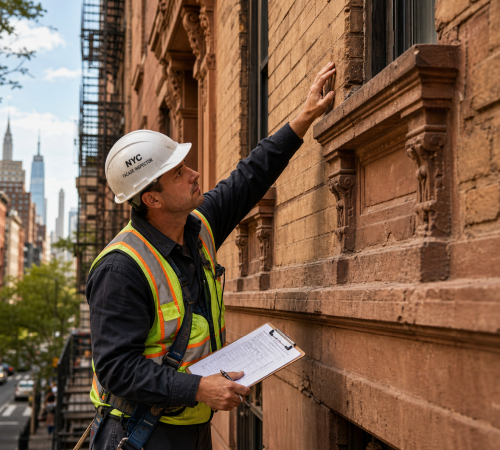
Owners of NYC buildings taller than six stories must hire a Qualified Exterior Wall Inspector (QEWI*) to check the exterior walls every five years. A QEWI is a licensed Professional Engineer or Registered Architect who is approved to perform these facade inspections under FISP Cycle 10 (February 21, 2025–2030).
If you do not follow these rules, the NYC Department of Buildings (DOB) can issue violations. Fines often start at $1,000–$5,000 for not filing the report, plus about $1,000 each month for late reports or unsafe conditions that are not fixed, and extra costs for sidewalk sheds.
Regular facade inspections help prevent dangers like falling bricks or pieces of the wall and can reduce your risk of lawsuits and expensive repairs.
Are Small One- or Two-Family Homes Exempt from FISP?
Key Exemptions & Considerations for Homeowners
Fully detached one- or two-family homes do not have to follow the 5‑year facade inspection schedule that applies to larger buildings. There are some exceptions. For example, under Local Law 126, some two-family homes with a parapet wall facing the street may still need a parapet inspection.
To see if any rules apply to your house, search your property in the DOB’s BIS system using your block and lot number.
Why Facade Inspection Rules Matter for Larger NYC Buildings
Owners of taller buildings can receive DOB violations and fines if they do not follow the facade inspection rules. Inspections cover masonry, windows, balconies, and other parts of the exterior to find problems before they cause pieces to fall or walls to fail. Missing deadlines increases your safety risks and can lead to higher repair costs later.
⚠️ Real-Life Facade Accident in Queens (May 2026)
In May 2026, a Queens pedestrian was injured when a heavy piece of a building facade broke loose and fell to the sidewalk. According to local news coverage, city inspectors later cited the owner for failing to maintain the exterior walls and required protective measures and repairs to prevent additional debris from falling (example report from PIX11)
What a NYC QEWI Checks During a Facade Inspection
The QEWI performs both visual and close-up checks of all exterior walls, including masonry and cladding. They also inspect attached building parts such as balconies, parapet walls, signs, and windows, especially on sides facing the street or sidewalk. They may use scaffolding or drones to look for cracks, loose material, water damage, and other structural problems.
Get Help Meeting NYC Facade Inspection Requirements
Ready to meet NYC DOB facade requirements? Contact IQ‑arius at iqarius.com to connect with qualified professionals for FISP inspections. We help NYC property owners get clear, detailed reports that find problems early, keep buildings in compliance, and protect your investment from violations and penalties.
Exploring NYC building compliance? The Iqarius Violation Hub covers far more than you might expect—from common DOB violations and inspection requirements to related terms and rules you didn’t know applied to your property. Discover connections between different building codes, learn how various regulations interact, and find answers to questions you haven’t thought to ask yet.
- Browse hundreds of NYC violation codes, inspection types, and building terms
- Uncover compliance topics related to your property type and situation
- Learn how different DOB rules connect and affect each other
Revised