What is a boiler and why can it cause NYC DOB problems?
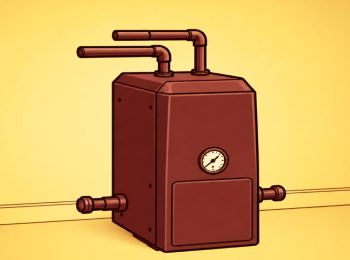
A boiler is a heating system that can also provide hot water in a building. In New York City, some boilers must be inspected, reported, and kept in safe condition under DOB rules. For homeowners, the word boiler does not only mean the machine itself. It often also means filings, deadlines, corrections, civil penalties, and boiler‑related violations.
In New York City, many multi‑family and commercial buildings must have a boiler that is properly installed, registered, inspected every year, and reported to the NYC Department of Buildings (DOB*). If a report is not filed, a defect is not corrected, or a removed boiler is not properly reported, the owner may still face penalties, even if the equipment is already fixed. Some smaller residential properties are exempt, but owners should always check whether their building and equipment are covered by the boiler rules.
Do not ignore
If you receive a boiler violation*, do not ignore it. Late penalties can grow for each month that the inspection report is not filed or the defect is not corrected.
Common boiler problems
1. Missing inspection report: A missing boiler inspection report can trigger a DOB violation, even if the boiler is still working.
One common problem is failure to file the required annual or periodic boiler inspection report. DOB says owners can fix this by filing the report and paying any civil penalties that apply. If your boiler is not inspected within the calendar year (January 1 to December 31) and the report is not filed, DOB can issue a boiler inspection violation and charge penalties. These annual rules mainly apply to low‑pressure boilers and some large domestic hot water heaters in multi‑family, mixed‑use, and commercial buildings.
2. Boiler defects not corrected: If a boiler inspector finds a defect, the owner usually must fix it and file proof on time.
An inspection can find defects that must be corrected and affirmed within the required deadline. NYC lists an Affirmation of Correction of Defects filing, with a deadline tied to the inspection date, and late filing can lead to penalties.
3. Boiler removal not reported: Removing a boiler is not enough by itself; the change may also need to be reported to DOB.
If a boiler was removed, the owner may need to file a Self-Certification of Boiler Removal, and NYC says failure to file a Boiler Removal Notification can lead to late penalties and additional violations.
4. Civil penalties keep the problem alive: A boiler case may stay open because of paperwork and penalties, not only because of the physical condition of the equipment.
NYC DOB publishes boiler filing fees and penalties, including late monthly penalties and full penalties for missed filings. DOB also notes that many boiler violations cannot be dismissed without payment of the full civil penalty.
Boiler in DOB papers
In DOB violation code lists, the letter B is used for boiler. A boiler‑related violation may also appear under related boiler codes on your Violation Codes HUB page. These codes only show that the violation is connected to the boiler system. You must read the notice or DOB NOW record to understand the exact problem.
Two types of boiler violations
When DOB issues a boiler violation, it usually falls into one of two categories, and it is important to know which one you have before you do anything else. The first type is called a Boiler Non-Filer Violation. This is a paperwork violation. Your boiler may be working correctly, but if the required annual inspection report was not filed with DOB before the December 31 deadline, DOB can issue this violation regardless of the physical condition of the equipment. The second type is called a Boiler Defect Violation. This is a mechanical violation. A licensed inspector checked your boiler, found a specific problem, and reported it to DOB. Each type requires a different correction process, and misidentifying your violation type can waste time and money. Always read your DOB notice or DOB NOW record carefully to confirm which type of violation you received before you take any action.
What to do next (practical steps)
If your boiler problem may be connected to a DOB violation, take these steps one by one.
- Check the violation code and description on your notice or in DOB NOW. Confirm whether the problem is connected to a boiler, a missing inspection report, an open defect, a late filing, or boiler removal.
- Look up the code on your Violation Codes HUB page. This helps you confirm the general meaning of the code, but always read the full DOB notice or DOB NOW record for the exact problem.
- Contact a qualified boiler professional. Many boiler cases require a licensed boiler inspector, a registered design professional, or another qualified expert to inspect the equipment, identify defects, and prepare the correct filing.
- Submit the required boiler filing on time. Boiler inspection reports are filed in DOB NOW: Safety, and DOB says inspection reports are due within 14 calendar days after the inspection is performed.
- Correct any defects and file proof if needed. DOB says defects generally must be corrected within the required deadline, and late correction filings can lead to more penalties.
- If the boiler was removed, make sure a Boiler Removal Notification (OP49) is filed in DOB NOW: Build within 30 days when required.
- Pay any civil penalty or request a waiver if you qualify. DOB provides boiler penalty and waiver options through its boiler violations process, and some waiver requests have a separate fee.
- Keep copies of reports, confirmations, and receipts. Good records can help you prove compliance later if DOB reviews the property again.
Good to know
This page is for general education only and is based on public New York City sources when available. Some technical and legal terms are simplified into plain English to help homeowners and ESL readers. It is not legal advice, and it does not replace guidance from a licensed professional. NYC construction and safety rules change often, and your project may have extra DOB*, OSHA*, or local requirements. Before you start work, always check current rules with a licensed design professional or directly with the NYC Department of Buildings.
DOB violation information


If you see any capital letter abbreviations on this page or in an official letter you received from the city and you do not understand them, you can try to look them up on our Violation Codes page with the search tool.
Revised