Cellar or Basement – what is the difference?
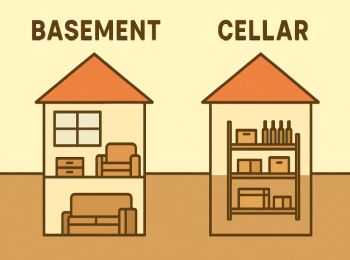
Basements and cellars are very different spaces and have different legal uses in New York City.
A cellar is an enclosed space having more than one‑half of its height below curb level. Usually, if a cellar has any windows, the windows are too small and too high for an adult to use as an emergency exit.
A basement* is a story of a building partly below curb level but with at least one‑half of its height above the curb level.
Typical legal uses for a cellar in a small home are storage, mechanical rooms (boiler, water heater), laundry, or recreational space that is not used for sleeping. A cellar in NYC is treated as a very risky location for sleeping or regular residential use because it often does not meet occupancy rules for light, air, egress, and habitable space. NYC’s official guidance also explains that illegal conversions include adding living space in a cellar without proper permits or approval.
Illegal in NYC
A cellar that is used for sleeping or as a regular bedroom may be considered an illegal apartment or an illegal conversion by NYC agencies.
Why this matters for NYC homeowners
In many one‑ and two‑family homes in NYC, renting a cellar as an apartment is not allowed, even if the space looks “finished” with floors, walls, and a bathroom. Illegal cellar apartments can lead to DOB* and HPD* violations, fines, and in some cases a vacate order*, which forces people to leave the space immediately.
In NYC law only certain basements can sometimes be used as legal living space.
Most cellars may not be legally habitable or used for sleeping, especially in one‑ and two‑family homes.
Always check your Certificate of Occupancy* or property records to see how the space is legally classified.
How to know if your space below your house is a basement or a cellar?
For those who are not sure if a cellar apartment is safe or legal, here are simple things to look for (these are general signs, not a full checklist).
- The floor is far below street level and the windows are small or at the top of the wall.
- There is only one way out of the cellar, usually one interior stair going up.
- There is no proper emergency escape window from the sleeping area or living room.
- The ceiling feels low (less than about 7 feet), or tall people can easily touch pipes or beams.
- You see signs of water, mold, or very damp walls, especially after heavy rain or storms.
If you see these conditions in a cellar where someone sleeps, it may be unsafe in a fire or flood and may not be legal under NYC rules.

NEXT STEP
Dangers of Illegal Basement and Cellar Conversions
Good to know
This page is for general education only and is based on public New York City sources when available. Some technical and legal terms are simplified into plain English to help homeowners and ESL readers. It is not legal advice, and it does not replace guidance from a licensed professional. NYC construction and safety rules change often, and your project may have extra DOB*, OSHA*, or local requirements. Before you start work, always check current rules with a licensed design professional or directly with the NYC Department of Buildings.
This is a new entry for review. It is created for general educational purposes, mainly for homeowners in New York City, but it can also be useful for others. Some technical and legal terms are explained in simple English to make them easier to understand, especially for ESL readers.

Good to know
This page is for general education only and is based on public New York City sources when available. Some technical and legal terms are simplified into plain English to help homeowners and ESL readers. It is not legal advice, and it does not replace guidance from a licensed professional. NYC construction and safety rules change often, and your project may have extra DOB*, OSHA*, or local requirements. Before you start work, always check current rules with a licensed design professional or directly with the NYC Department of Buildings.


If you see any capital letter abbreviations on this page or in an official letter you received from the city and you do not understand them, you can try to look them up on our NYC Violation Codes HUB page with the search tool.
Revised