NYC DOB Complaint Process: What Homeowners Should Do
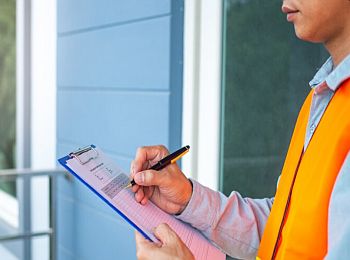
A DOB complaint is a report to New York City about possible illegal or unsafe construction work or improper building use.
A complaint is not a violation
A complaint is an allegation or report. It does not prove that a property owner violated a DOB rule. DOB may review the complaint, inspect the property, and decide whether enforcement is appropriate.
Important: After a person files a DOB complaint through 311 or 311 Online, that person receives a Service Request number. The request can be followed through 311 Online. Owners should also check their property’s DOB records for recorded complaints, inspections, violations, and other enforcement information.
If someone filed a complaint about your property, this guide explains the usual next steps and what you should check.
How the DOB complaint process works
Common homeowner concerns include: possible illegal conversion or occupancy, construction without required permits, unauthorized after-hours construction, unsafe construction activity, and work that may continue despite a Stop Work Order.
- A neighbor, tenant, passerby, worker, or another person reports a possible problem by calling 311 or using 311 Online.
- The 311 system creates a Service Request number for the person who filed the report. The requester can use that number to follow the complaint through 311 Online.
- DOB reviews the complaint and may send an inspector or the appropriate enforcement unit to investigate the reported condition.
- DOB prioritizes complaints that present an immediate safety risk. Inspection timing depends on the complaint type, its priority, and DOB operations.
- If DOB confirms a condition that requires enforcement, it may issue a violation, summons, Stop Work Order, or another enforcement action. If DOB does not confirm a condition requiring enforcement, the complaint may be closed without a violation.
For immediate danger, call 911. NYC 311 specifically directs people to call 911 for emergencies such as an immediate falling-debris hazard, a gas odor or possible gas leak, or an accident.
What to do if your property has a DOB complaint
- Check the property record. Use BIS for legacy DOB information, including complaint and violation history. Also check the DOB NOW Public Portal for applicable DOB NOW records, filings, and project information.
- Read the record carefully. Confirm the property address, complaint category, complaint status, inspection information, and any related violation, summons, or Stop Work Order.
- Verify an inspector’s identity. If a person states that they are a DOB inspector, ask for official identification. Keep a factual record of the visit, including the date, name, badge information if provided, and what was discussed.
- Respond to official notices. If DOB issues a Notice of Violation, summons, Stop Work Order, Notice to Inspect, or another document, follow the instructions and deadlines stated in that document.
- Get qualified help when needed. Permit, occupancy, structural, safety, or enforcement matters may require a New York State licensed design professional, licensed contractor, attorney, or another qualified professional.
- Keep proof of correction. Save permits, approved plans, photographs, invoices, inspection records, certificates, and correspondence that may help show how a condition was addressed.
DOB complaint categories and disposition codes
A complaint category identifies the type of problem reported to DOB. A disposition code records an action or result after DOB reviews or investigates the complaint. These are different types of codes, so read them together with the complaint status and any related enforcement records.
Examples of complaint categories
DOB’s published complaint-category reference includes these examples. These are complaint categories, not violation codes, and a category alone does not prove that a violation occurred.
| Category code | Reported problem |
|---|---|
| 4 | Illegal after-hours work |
| 5 | Work without a building, plumbing, or demolition permit |
| 45 | Illegal conversion |
| 86 | Work contrary to a Stop Work Order |
These examples are not a complete list. Check the wording in your property’s complaint record and compare it with the official DOB complaint-category reference.
Understanding DOB complaint disposition codes
Complaint disposition codes are short labels used in DOB’s Buildings Information System (BIS) to record actions and results. You may also see them described as complaint closure codes, but not every disposition means that a complaint was closed or that a problem was corrected.
A disposition may record an inspection result, a referral to another agency, an access problem, or an enforcement action. For example, DOB’s published reference includes:
- A8 — OATH Violation Served.
- F8 — Referral to HPD.
- I2 — No Violation Warranted for Complaint at Time of Inspection.
For the meaning of a particular code, use the official BIS complaint disposition-code reference. Read the full complaint record rather than relying on the code alone.
A closed complaint does not always mean a corrected problem
The complaint record shows how DOB handled the report. A related violation, summons, or Stop Work Order is a separate enforcement record and may still require action.
Check the complaint status, disposition code, inspection notes, and any related enforcement documents. Follow the instructions and deadlines on those documents instead of assuming that “closed” means no further action is needed.
How to reduce the risk of a DOB violation
A DOB complaint does not automatically result in a violation. DOB may close a complaint without issuing a violation if it does not confirm a condition requiring enforcement. However, DOB may take enforcement action when an inspection identifies unsafe work, illegal occupancy or use, work without required permits, or another condition that does not comply with applicable NYC requirements.
- Check BIS for legacy complaint history. Check the DOB NOW Public Portal for DOB NOW applications, compliance filings, and certain DOB NOW-related records.
- Confirm permit requirements before starting work. Renovations, structural work, plumbing, electrical work, and changes to building use may require DOB approval, permits, inspections, or licensed professionals.
- Do not create or rent an illegal apartment. Basement, cellar, attic, garage, and other spaces may have strict rules for legal occupancy, exits, ceiling height, light, ventilation, and fire safety.
- Keep safety conditions under control. Repair hazardous conditions such as loose façade material, damaged stairs or railings, unsafe electrical wiring, blocked exits, or inadequate heat and hot water.
- Use licensed professionals when required. A registered design professional, licensed contractor, plumber, or electrician may be required depending on the scope of work.
- Keep records. Save permits, approved plans, inspection records, contractor agreements, invoices, photos, and proof that a condition was corrected.
- Check your property regularly. Review DOB records and correct problems early, especially before starting construction, renting space, or selling the property.

NEXT STEP
See how complaint process looks in real NYC examples
Good to know
This page is for general education only and is based on public New York City sources when available. Some technical and legal terms are simplified into plain English to help homeowners and ESL readers. It is not legal advice and does not replace advice from a licensed professional. NYC construction and safety requirements can change, and a project may have additional DOB*, zoning, floodplain, utility, or local requirements. Before starting work, verify current requirements with a New York State licensed design professional or directly with the NYC Department of Buildings.


Revised